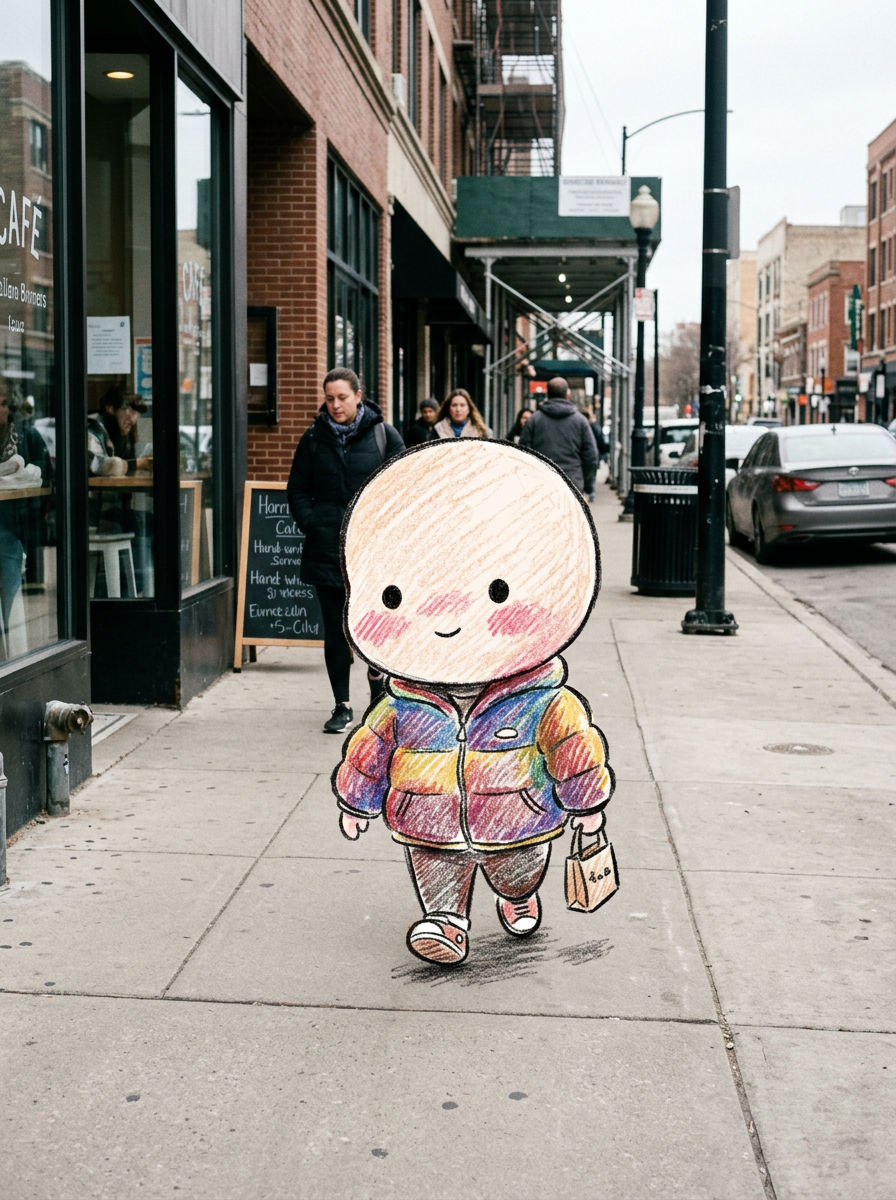
Edit the uploaded photo by replacing the primary person with a hand-drawn chibi character rendered in crayon, soft chalk, and colored-pencil texture, while leaving the real photographic background completely untouched. Preserve the original environment’s lighting, perspective, colors, depth, surface detail, and background sharpness exactly; only the human figure becomes a cute illustrated overlay. Recreate the person’s approximate position, scale, facing direction, gesture, and recognizable accessories inside a simplified kawaii design: oversized round head, small body, stubby arms and legs, dot eyes, a tiny smile, and rosy cheek smudges. Carry over the hairstyle silhouette, hair color, glasses, hat, scarf, jacket or shirt colors, bags, headphones, shoes, and any prominent personal items as charming illustrated details, not a photoreal copy. If multiple people appear, transform only the most prominent subject and keep the rest of the photo natural.
Use a waxy crayon texture with visible strokes, uneven coloring, soft chalk smudges, hand-drawn outlines, paper grain, and slight imperfections that make the figure look drawn directly onto the photograph. Keep the illustrated character saturated but powdery, with pastel skin tones around warm peach and cream, blush around soft rose, and clothing colors matching the original wardrobe, including playful multicolor shading where the photo contains colorful fabrics. Outline the character in a charcoal-like line, slightly imperfect and childlike, with occasional colored-pencil edges instead of a clean digital contour. Add subtle contact shadow and faint ambient shading beneath the feet or lower body so the drawing feels placed in the scene, using shadow tones that match the real background light. Maintain crisp, readable line edges for the character while keeping the photograph behind it sharp, natural, and unretouched.
The overall mood should be whimsical, childlike, and sticker-like, like a cheerful crayon doodle overlaid onto a real street, café, room, park, or travel photo. Aim for clean cutout quality, no rough masking edges, no duplicated anatomy, and no background warping. Avoid: flat vector cartoon, 3D plastic character, anime realism, heavy blur, smudged face, distorted proportions, extra limbs, altered background, neon colors, messy paint splatters, overly glossy digital shading, or replacing the entire scene with an illustration.